
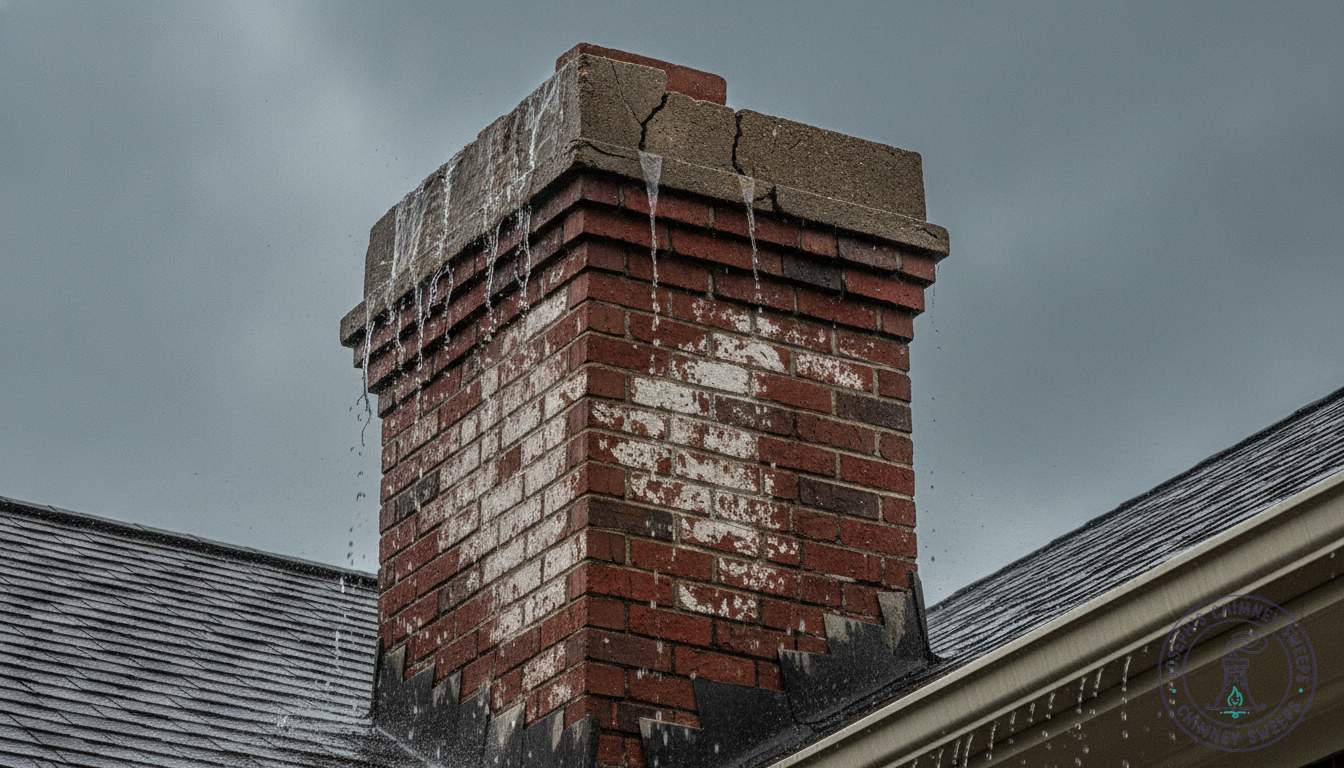
Charlotte, NC averages more than 43 inches of rainfall per year — well above the national average — plus occasional snow and ice events in winter. For homeowners with brick chimneys, that consistent moisture exposure is not a minor inconvenience. It is the primary driver of chimney deterioration, and it works year-round whether your fireplace is in use or not.
At Joseph's Chimney Sweeps, the majority of the repair and restoration work we perform across Mecklenburg County is directly caused or significantly accelerated by water. Here are the five most common ways Charlotte's rainy climate is silently damaging your chimney — and what you can do about each one.
1. A Missing or Damaged Chimney Cap Is Letting Rain Directly Into Your Flue
The most immediate source of water damage for many Charlotte chimneys is simple: there is nothing covering the flue opening. Without a chimney cap, every rainstorm drives water straight down into the flue liner, soaking the firebox floor, rusting the damper assembly, saturating the smoke chamber, and beginning the process of liner and mortar deterioration from the inside out.
Charlotte's spring and summer storm systems are particularly aggressive — intense, heavy rain that can deliver two or more inches of water in a single afternoon. An uncapped chimney during one of these events absorbs a significant quantity of water.
The fix is straightforward and relatively inexpensive: a properly fitted stainless steel or copper chimney cap seals the flue opening against rain while maintaining adequate airflow for draft. Our chimney cap installation service covers single-flue and full-width multi-flue cap designs, all with mesh spark arrestors. It is one of the highest-return investments in chimney maintenance available to Charlotte homeowners.
2. Cracked Chimney Crowns Are Channeling Water Into the Masonry
The chimney crown is the concrete or mortar cap that covers the top of the chimney stack around the flue tile opening. Its purpose is to direct water away from the flue and off the face of the chimney. When the crown cracks — which happens frequently in Charlotte due to thermal cycling and the shrinkage of improper mortar mixes used in original construction — water collects in those cracks and infiltrates directly into the top of the masonry stack.
A cracked crown is often the first domino: once water enters through the crown, it saturates the upper courses of brick and mortar, accelerates joint deterioration, and can work its way down through the interior of the chimney structure into the attic framing and ceiling below.
Crown crack repair or full crown rebuilding is a core part of our chimney masonry repair service. We use properly mixed mortar and, where appropriate, elastomeric crown sealers that flex with seasonal temperature changes rather than re-cracking immediately.
3. Failed Chimney Flashing Is Causing the Leak You Blamed on the Roof
Chimney flashing is the metal seal — typically step flashing and counter-flashing in an overlapping system — that waterproofs the joint between the chimney and the surrounding roofline. It is one of the most technically demanding areas of the entire roof system to seal correctly, and it is one of the most common sources of interior water leaks in Charlotte homes.
Homeowners frequently discover ceiling stains or water-damaged drywall near the fireplace and assume it is a roofing problem. In many cases, the roof is fine — the flashing around the chimney has separated, corroded, or was never properly installed in the first place. Water runs down the chimney exterior, gets behind the flashing, and travels directly into the attic or wall cavity below.
If you have ceiling stains near your fireplace, water in your firebox after rainstorms, or visible rust and separation at the chimney base on the roof, a professional chimney inspection is the correct starting point. Our technicians will document the exact source of the leak and provide specific repair recommendations. Flashing repair and replacement is included in our chimney repair services.
4. Freeze-Thaw Cycles Are Spalling Your Bricks and Eroding Your Mortar
Charlotte does not experience a true Northern winter, but it does experience enough freeze-thaw cycles each year to cause meaningful masonry damage. Here is how the process works: brick absorbs rainwater into its porous surface. When temperatures drop below freezing — which happens intermittently throughout Charlotte winters — that trapped water expands as it turns to ice, exerting pressure on the brick face from within. Over repeated cycles, this pressure pops off the outer face of the brick in thin layers (called spalling) and pushes apart the mortar joints that hold the masonry together.
Neighborhoods with particularly heavy tree canopy, like Myers Park and Dilworth, see this problem more acutely because shaded brick stays wet longer after rain events, giving it less time to dry out before the next freeze.
Spalled brick and eroded mortar joints require tuckpointing and brick replacement to restore structural integrity. After repairs are complete, applying a vapor-permeable chimney waterproofing sealer prevents the same moisture absorption cycle from restarting. These two services together represent the most effective long-term strategy for protecting exposed masonry in Charlotte's climate.
5. Moisture Is Quietly Destroying Your Chimney Liner From the Inside
Even if your chimney has a cap and the exterior masonry looks sound, water can still reach the liner through hairline cracks in the mortar between clay tile sections — especially in chimneys that have experienced even a minor chimney fire in the past. Once moisture consistently contacts the liner interior, it accelerates the breakdown of the mortar that holds tile sections together and corrodes any metal components within the flue system, including the damper and any gas appliance connector hardware.
This type of damage is invisible from below and is only reliably detected through a video camera inspection of the full flue length. Our Level II chimney inspection uses a flexible camera probe to reveal cracks, separated joints, and corrosion that would otherwise go unnoticed until a much more serious failure occurred. Homeowners in SouthPark, NoDa, and throughout the Charlotte area regularly discover significant liner deterioration during routine inspection — long before any visible symptoms appeared at the firebox level.
If liner damage is confirmed, our chimney liner installation service restores full flue integrity with a properly sized stainless steel system built to handle Charlotte's climate for decades.
The Complete Moisture-Management Solution for Charlotte Chimneys
The good news is that all five of these moisture problems are preventable and correctable. The most cost-effective approach is to address them together as a system:
- Schedule a professional chimney inspection to document every current deficiency with photo and video evidence
- Complete any needed masonry repairs — tuckpointing, crown work, flashing, brick replacement
- Install a quality chimney cap to stop direct water entry at the flue
- Apply a professional vapor-permeable waterproofing sealer to the exterior masonry
- Schedule annual chimney sweeping to maintain clean, efficient operation and catch new issues early
Joseph's Chimney Sweeps serves homeowners throughout Charlotte, NC and all of Mecklenburg County, including Dilworth, Myers Park, Plaza Midwood, SouthPark, and NoDa. We are available Monday through Sunday, 8:00 AM to 6:00 PM. Call us at +1 (980) 351-6516 or email [email protected] to schedule your inspection and get a complete picture of your chimney's condition before the next storm season arrives.
Discuss This With Our Team
Call +19803516516 or fill out our online form for a free, no-obligation quote.
Request Free Quote