
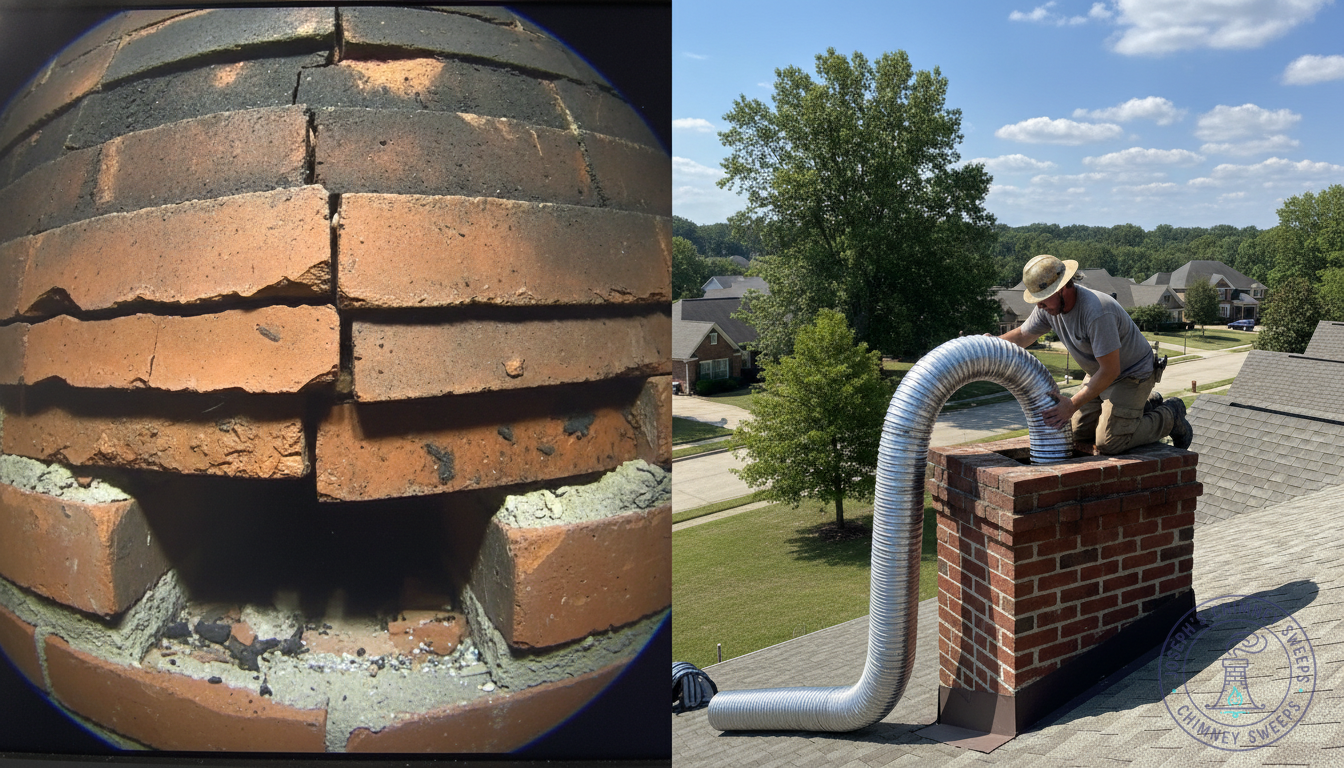
Charlotte, NC has an impressive stock of historic homes — particularly in neighborhoods like Myers Park, Dilworth, and Plaza Midwood — many of which were built between the 1920s and 1970s. These homes are beautiful, architecturally significant, and often feature original wood-burning fireplaces. They also frequently have clay tile flue liners that are well past their reliable service life.
If your home falls into this category, understanding the role of the chimney liner — and recognizing when it has failed — could prevent a house fire, carbon monoxide exposure, or an expensive structural repair bill.
What Does a Chimney Liner Actually Do?
The flue liner serves three essential functions in your chimney system:
- It contains combustion gases. Hot exhaust gases, carbon monoxide, and burning embers are all kept inside the flue and directed safely out of the home above the roofline.
- It protects the surrounding masonry. Combustion byproducts are highly acidic and would rapidly deteriorate the brick and mortar of the chimney structure if they came into direct contact with it. The liner absorbs and contains that chemical attack.
- It maintains correct draft diameter. A liner sized correctly to the appliance it serves ensures that gases travel upward efficiently, preventing backdrafting and smoke spillage into the living area.
When any one of these functions is compromised by a cracked, spalled, or missing liner, the entire fireplace system becomes unsafe to operate.
Why Clay Tile Liners Fail
Original clay tile liners — the terracotta rectangular or round sections stacked inside the flue during construction — were the industry standard for most of the 20th century. They are durable under normal conditions, but they are vulnerable to several failure modes common in Charlotte:
- Chimney fires. Even a small, fast-burning chimney fire can crack clay tile sections that are not rated for extreme temperatures. Because chimney fires often go unnoticed by homeowners, liner damage from a past event is a common finding during inspections of older homes.
- Thermal cycling. The repeated expansion and contraction of the liner from cold ambient temperatures to extreme heat every time a fire is lit gradually weakens the mortar between tile sections, causing joints to open and tiles to shift.
- Moisture intrusion. Without a properly installed chimney cap, rainwater enters the flue directly and saturates the liner and surrounding masonry. Freeze-thaw cycles in Charlotte winters then pry tiles apart from the inside.
- Age alone. Clay tile liners in homes built before 1980 are now more than 45 years old. Even without visible events, a liner of that age deserves professional evaluation.
Warning Signs of a Damaged Chimney Liner
Because the flue liner is hidden inside the chimney, homeowners cannot inspect it directly. However, several symptoms at the surface level suggest liner problems worth investigating:
- White mineral staining (efflorescence) on exterior brick, indicating water is migrating through the masonry from inside
- Smoke entering the room when the fireplace is in use
- A strong exhaust smell near the firebox or in rooms adjacent to the chimney
- Elevated carbon monoxide readings in the home
- Visible chunks of clay tile debris inside the firebox after a fire
- A crackling or popping sound from inside the chimney during a fire
The only definitive way to assess liner condition is a video camera inspection of the full flue. Our Level II chimney inspection uses a flexible camera probe to produce a real-time video feed of every inch of the liner interior, capturing cracks, missing sections, separated joints, and blockages that are invisible from below. You receive a written report and a copy of the video documentation.
Stainless Steel Liner Installation: The Modern Solution
When a clay tile liner is found to be damaged beyond cleaning or spot-repair, a new liner is the correct solution — not continued use of a compromised system. Joseph's Chimney Sweeps installs 316-alloy stainless steel flexible and rigid liner systems for wood-burning fireplaces, gas inserts, and wood stoves throughout Mecklenburg County.
Stainless steel liners offer several advantages over the original clay tile systems:
- Seamless construction eliminates the joint-separation failure mode of sectional clay tile
- 316-alloy steel resists the acidic condensate from all fuel types
- Flexible liner systems can navigate the offsets common in older Charlotte chimney construction
- Manufacturer lifetime warranties when properly maintained with annual cleanings
For severely deteriorated flues where a flex liner cannot adequately seal the interior, cast-in-place cement liner systems are available. These are poured in a continuous seamless column inside the existing flue, creating an entirely new structural liner that also adds insulative value to the chimney.
Every liner we install includes a correctly sized top plate and a stainless or copper chimney cap to prevent moisture re-entry from day one. Learn more about our complete chimney liner installation service.
Liner Replacement as Part of a Complete Chimney Restoration
Liner installation is most efficiently completed alongside any necessary masonry repairs. If the inspection reveals cracked mortar joints, a damaged chimney crown, or spalling brick in addition to a failing liner, addressing all of these in one project visit is significantly more cost-effective than scheduling separate trips. Our chimney repair services cover tuckpointing, crown rebuild, flashing repair, and brick replacement — everything needed to restore the full system.
After repairs and liner installation are complete, we recommend a professional chimney waterproofing treatment to seal the exterior masonry and eliminate the moisture entry that likely contributed to the original liner deterioration.
Schedule a Liner Inspection in Charlotte, NC
If your Charlotte home was built before 1980 — or if you have noticed any of the warning signs described above — call Joseph's Chimney Sweeps at +1 (980) 351-6516 to schedule a video camera inspection. We are available seven days a week from 8:00 AM to 6:00 PM and serve homeowners throughout Myers Park, Dilworth, Plaza Midwood, and all surrounding Charlotte communities.
Discuss This With Our Team
Call +19803516516 or fill out our online form for a free, no-obligation quote.
Request Free Quote